

When people first start looking into shoulder pain causes, the pattern can feel confusing. A shoulder aches after a workout one week, then catches when you reach for a coffee mug or check your blind spot on I-70. At first it seems like a simple strain. When the episodes keep returning, it becomes clear that something more specific is going on.
Many people who come to Core Medical Center have already tried rest, ice, and a few stretches on their own. Some bring imaging reports. Others bring only a long story of on-and-off discomfort. What they want to know is straightforward. Is the problem in the rotator cuff, is it shoulder impingement, or is the pain actually coming from the neck and upper back?
Common Shoulder Pain Causes When Daily Tasks Start to Hurt
For most adults, shoulder pain shows up first in ordinary routines. Lifting a laptop bag into the car, steering on a long drive, or reaching into the back seat can suddenly feel risky. Behind these patterns, three causes are especially common: rotator cuff overload, impingement, and referred pain from the spine.
Rotator Cuff Pain Symptoms That Affect Daily Tasks
The rotator cuff is a group of small muscles and tendons that keep the ball of the shoulder steady in its socket. When that system gets irritated, the symptoms tend to look familiar. You may feel a dull ache on the outside of the arm, pain when you lift something away from your body, or weakness when you try to set an object on a shelf.
Sleeping on the sore side gets harder. Putting on a jacket starts to feel awkward. Over time the body tries to protect the area, and nearby muscles begin to compensate. That compensation pattern can keep the symptoms going long after the original strain should have settled.
Shoulder Impingement Signs in Active Adults
Shoulder impingement happens when the soft tissues at the top of the joint get pinched during movement. Common signs include pain through a specific arc as you raise your arm, a sharp catch when you reach overhead, or discomfort as you rotate to fasten a seatbelt.
A lot of people notice this while working at a computer or driving between meetings. The head drifts forward, the upper back rounds, and the space inside the shoulder joint narrows. Repeated over weeks and months, that mechanical pinch can irritate tendons and bursae and make even light activity feel harder than it should.
When Shoulder Pain Is Referred From the Neck or Upper Back
Sometimes the shoulder is not the real source at all. Irritated joints or discs in the neck, tight muscles around the shoulder blade, or nerve irritation in the upper back can send signals that the brain reads as shoulder pain. This referred pain often feels vague, deep, and hard to pinpoint.
In these cases the shoulder can look normal on imaging while the actual issue sits higher in the spine. That is why a good evaluation checks the neck, the rib cage, and posture, not only the joint that hurts.
The Science Behind Shoulder Mobility and Pain
Healthy shoulder motion depends on several structures working together. The ball and socket joint, the shoulder blade, the collarbone, and the upper back all share the load when you reach, push, or pull. When one area stiffens, another has to move more, and the whole system becomes easier to overload.
Pain is also not just a local event in the shoulder. Nerves carry signals through the spinal cord to the brain, where past injuries, stress, and sleep quality all shape how strong that pain feels. The part of the nervous system that manages the stress response can keep the muscles around the shoulder tense when it stays switched on too long. Over time that creates a feedback loop that keeps the joint stiff and sore.
Why Kansas City Area Adults Choose Core Medical Center
For busy people in Blue Springs, Overland Park, and the surrounding Kansas City metro, long commutes and packed schedules are part of the picture. Core Medical Center is set up for patients who split their time between home, work, and everywhere in between.
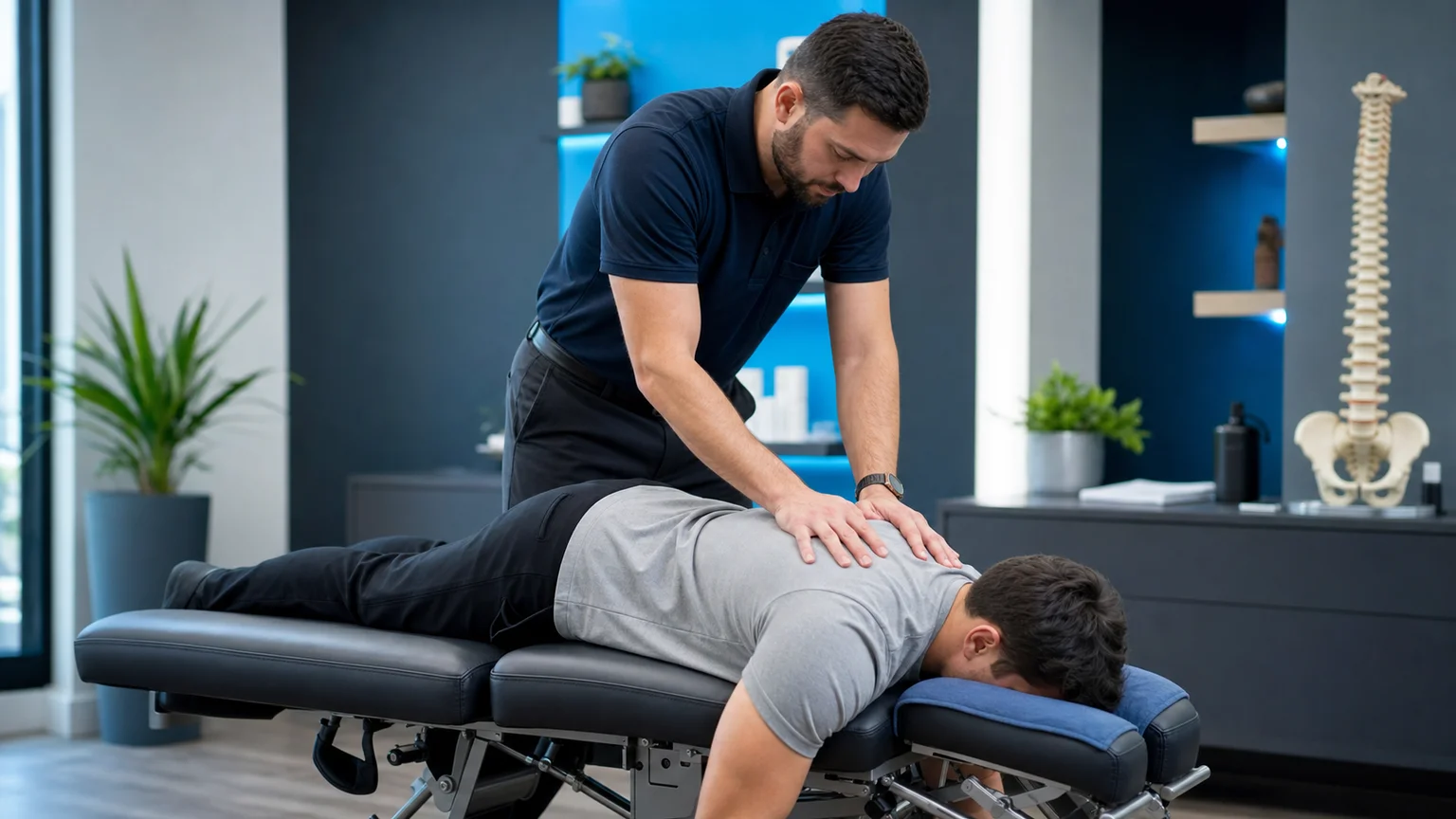
Here, shoulder pain is not looked at in isolation. The team brings chiropractic care, functional medicine, and regenerative medicine together to see how posture, movement patterns, inflammation, and overall health interact. For many patients the plan starts conservatively, often with hands-on chiropractic care for the shoulder and spine paired with targeted exercises and small habit changes that fit a real schedule. The full range of chiropractic services for joint and spine pain is built around restoring mobility before symptoms settle into a long-term pattern.
When symptoms have lingered or involve more complex joint changes, the medical side of the team reviews whether advanced options are appropriate. Any cellular or regenerative therapy at Core Medical Center is provided under medical supervision and administered by qualified clinical staff, with safety and clear communication as priorities.
What to Expect During a Shoulder Pain Visit
A visit for shoulder pain starts with a focused conversation. Your clinician asks when the problem began, which movements are hardest, and how your workday and workouts are structured. They look for patterns that point to local tissue overload, rotator cuff irritation, or impingement. Prior imaging is reviewed when you have it, and new studies are ordered only when they are likely to change the plan.
The physical exam checks posture, neck motion, and shoulder mobility in simple, practical positions. Once the findings are clear, the team lays out a plan built around your goals and your schedule. For many people that means a short course of chiropractic care, exercises you can do at home or at the gym, and clear guidance on rest and activity. Others may benefit from added regenerative or functional strategies when those are appropriate.
Choosing Your Next Step
When you understand the common shoulder pain causes, it becomes easier to see whether your problem fits a rotator cuff pattern, impingement, or referred pain from the neck and upper back. That clarity matters, especially when you are responsible for a team, a business, or a family and cannot afford repeated setbacks.
A targeted evaluation can show whether simple changes are enough or whether a more structured plan would serve you better, one that addresses joint mechanics, nervous system balance, and overall health. If shoulder pain has been limiting your work, your training, or your time with family, you do not have to guess your way forward.
If your shoulder has been holding you back, learn more about how the team approaches shoulder pain and schedule a focused assessment with the Core Medical Center team.
Frequently Asked Questions
How do I know if my shoulder pain is from the rotator cuff or from my neck?
Rotator cuff problems usually produce a dull ache on the outside of the arm with weakness when you lift or reach away from your body. Pain that is referred from the neck tends to feel deeper and harder to pinpoint, and it may come with stiffness or tingling that travels into the arm. A focused evaluation that checks both the shoulder and the neck is the most reliable way to tell them apart, since the shoulder can look normal on imaging while the real source sits higher in the spine.
When should I see someone for shoulder pain instead of waiting it out?
It is reasonable to give a mild strain a week or two of rest and gentle movement. If the pain keeps returning, disturbs your sleep, limits overhead reaching, or comes with noticeable weakness, that is a good time for a targeted evaluation. Catching a pattern early often means a shorter, more conservative plan rather than a longer recovery later.
Can chiropractic care help shoulder pain that comes from posture and desk work?
Yes. A lot of shoulder pain in active adults traces back to a forward head posture and a rounded upper back that narrows the space inside the joint. Hands-on chiropractic care for the shoulder and spine paired with targeted exercises can improve how the shoulder blade and upper back move, which takes pressure off the irritated tissues over time.
Do I need an MRI before my first visit for shoulder pain?
Not usually. Most shoulder evaluations start with a conversation about your symptoms and a hands-on exam of posture, neck motion, and shoulder mobility. Prior imaging is reviewed when you already have it, and new studies are ordered only when they are likely to change the plan. This keeps the process focused and avoids unnecessary testing.
Is Core Medical Center convenient for people commuting around Kansas City and Blue Springs?
Yes. The clinic is set up for busy adults who split their time between home, work, and the wider Kansas City metro, including Blue Springs and Overland Park. Plans are built around real schedules, with conservative care first and clear guidance on what you can do at home or at the gym between visits.