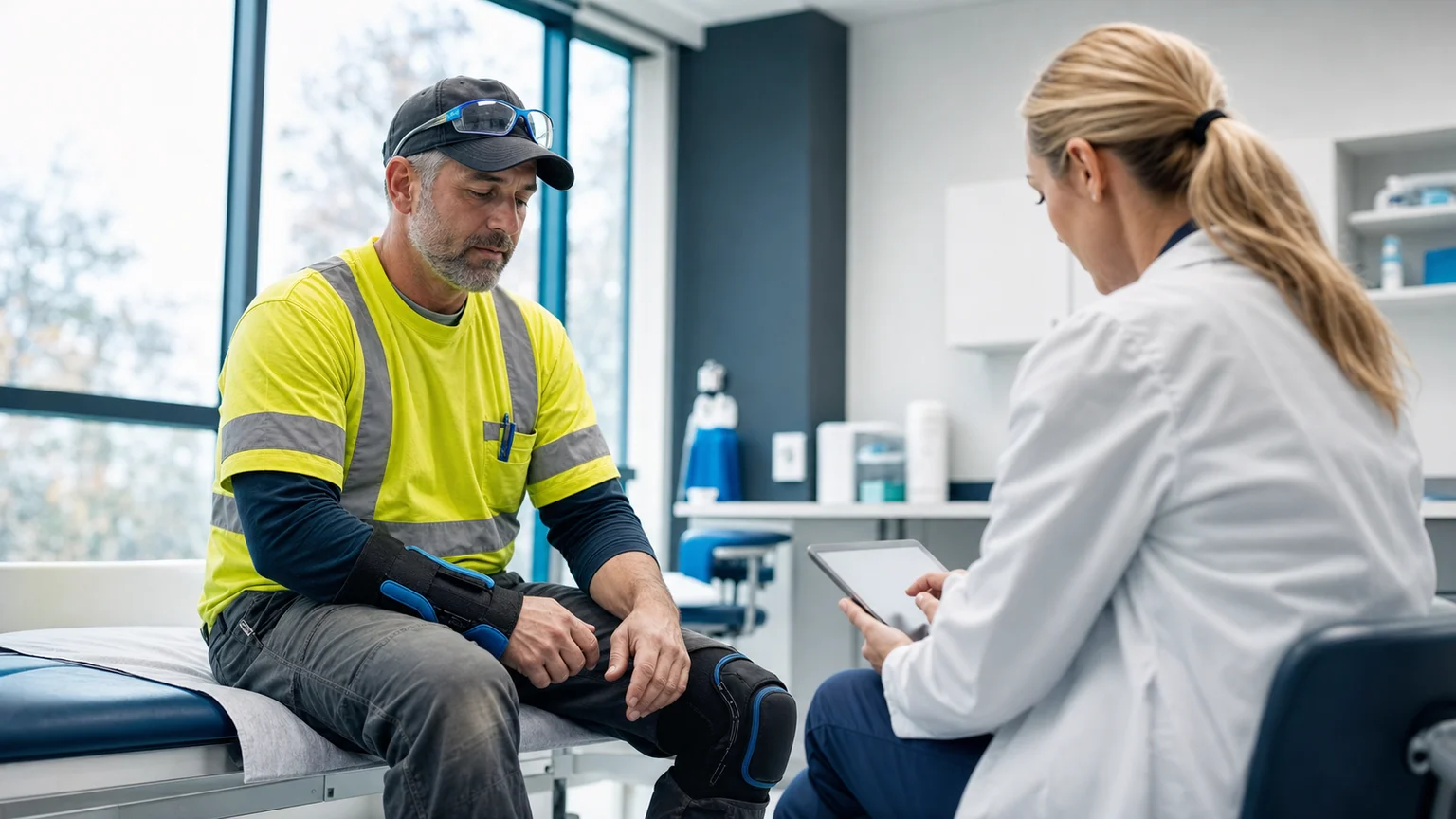

Sciatica can derail your whole day. For a lot of people in the Kansas City metro, the trigger is not a single dramatic injury but the daily demands of the job itself. Long hours behind a desk, heavy lifting on a warehouse floor, or the same bending and twisting motion repeated hundreds of times can all set the stage for nerve pain that runs from your lower back down your leg. Knowing which work habits raise your risk is the first step toward staying ahead of it.
What Sciatica Actually Is
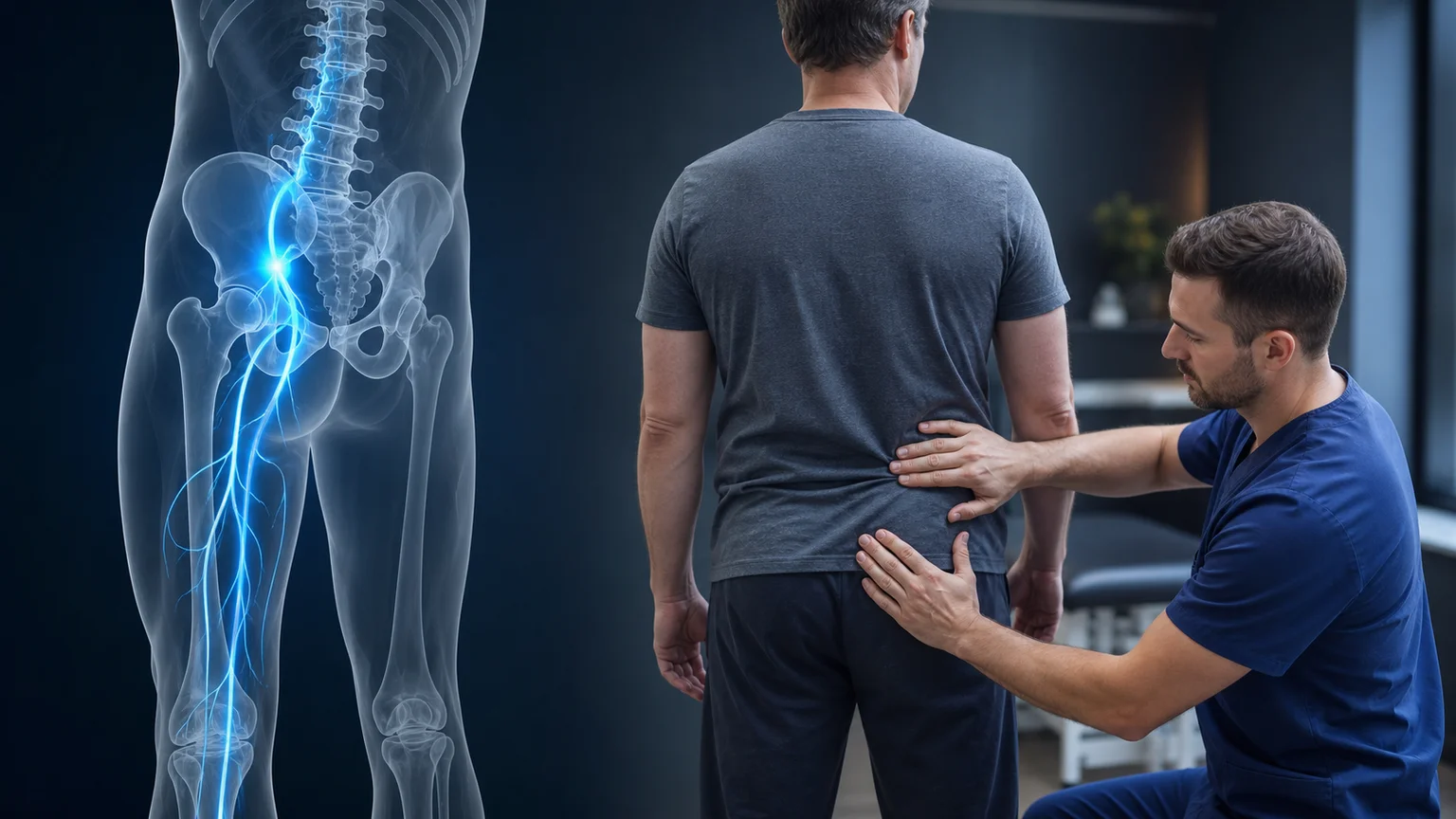
Sciatica is pain that travels along the path of the sciatic nerve, the longest nerve in the body. It branches from your lower back, runs through your hips and buttocks, and continues down each leg. In most cases it affects only one side. The pain can range from a dull ache to a sharp, burning sensation or a jolt that makes it hard to stand, sit, or sleep. Some people also notice tingling, numbness, or weakness in the affected leg.
Because the symptoms can mimic other conditions, it helps to understand what tends to bring them on so you can recognize the pattern early.
Common Work-Related Risk Factors
Your daily routine plays a bigger role than most people realize. These four factors come up again and again.
Prolonged Sitting
Sitting for hours puts steady pressure on your lower back and the discs that cushion your spine. Office workers, long-haul drivers, and anyone who spends a full shift in a chair are especially prone to it. The longer you stay still, the more that pressure builds, and the less blood flow reaches the muscles and tissues that support your spine.
Heavy Lifting
Jobs that involve lifting and carrying can strain the back quickly, particularly when the load is awkward or the technique is rushed. Lifting with your back instead of your legs, or twisting while you carry something heavy, multiplies the stress on your lower spine and can aggravate the sciatic nerve.
Repetitive Motion
Bending, twisting, and reaching over and over throughout a shift wears the lower back down over time. The motion itself may feel minor, but repeated hundreds of times a day it leads to muscle fatigue and strain that can eventually irritate the nerve.
Poor Posture
Slouching at a desk or standing with your weight off balance keeps your spine in positions it was not built to hold for long stretches. Over weeks and months, that habit contributes to the kind of back problems that lead to sciatica.
How to Protect Your Back at Work
The good news is that small, consistent changes make a real difference. A few practical habits can lower your risk noticeably.
- Set up your workstation for good posture. Adjust your chair, screen, and keyboard so your spine stays supported and your shoulders stay relaxed.
- Take regular breaks. Stand, stretch, and walk around every hour or so to relieve pressure and keep blood moving.
- Lift with your legs, not your back. Bend at the knees, keep the load close to your body, and avoid twisting while you carry it.
- Stay active outside of work. Regular movement strengthens the core and back muscles that stabilize your spine, which makes the everyday demands of your job easier to handle.
These steps will not undo every workplace stressor, but together they reduce the strain that builds toward nerve pain.
When to See a Professional
If you are already feeling that radiating pain, tingling, or weakness down one leg, do not wait it out and hope it fades. Sciatica that is caught and addressed early is far easier to manage than pain that has been allowed to settle in for months. A proper evaluation can pin down what is actually driving your symptoms, whether it is a disc, posture, repeated strain, or something else, so the care you get fits the real problem.
At Core Medical Center, our team works with patients across Blue Springs, Overland Park, and the wider Kansas City area to find the source of low back and leg pain and build a plan around it. If your job is taking a toll on your back, our sciatica pain treatment program is designed to relieve the nerve pressure behind your symptoms, and our broader pain management services can address the related back and joint problems that often come with it.
Frequently Asked Questions
Can my job really cause sciatica?
Yes. While a single injury can trigger sciatica, the more common pattern for working adults is gradual strain from prolonged sitting, repetitive bending and twisting, awkward lifting, or poor posture held for hours at a time. Over weeks and months, these habits can irritate the sciatic nerve and bring on pain that radiates down the leg.
How long does work-related sciatica usually take to improve?
Many cases of sciatica ease within a few weeks once the source of the strain is addressed and the right care begins. Pain that has been allowed to settle in for months tends to take longer, which is why an early evaluation matters. A treatment plan built around your specific job demands and symptoms gives you the best chance of a faster, more lasting recovery.
Should I keep working if I have sciatica?
It depends on your job and how severe your symptoms are. Light movement is usually better than complete bed rest, but heavy lifting, repeated twisting, and long stretches of sitting can make things worse. A clinician can help you understand which activities to modify and how to protect your back while you heal.
When should I see a doctor for sciatica instead of waiting it out?
If you have radiating pain, tingling, numbness, or weakness down one leg that lasts more than a few days, it is worth getting evaluated. Sudden severe pain, loss of bladder or bowel control, or rapidly worsening weakness are warning signs that call for prompt medical attention.
Does Core Medical Center treat work-related back and leg pain in the Kansas City area?
Yes. Core Medical Center works with patients across Blue Springs, Overland Park, and the wider Kansas City metro to find the source of low back and leg pain and build a care plan around it. That includes evaluating how your job may be contributing to your symptoms and addressing the strain before it becomes a long-term problem.