

Condition
Traumatic Brain Injury
Traumatic brain injury care in Blue Springs and Kansas City. Neuropsychology, concussion recovery and objective testing for headaches, memory and mood symptoms.
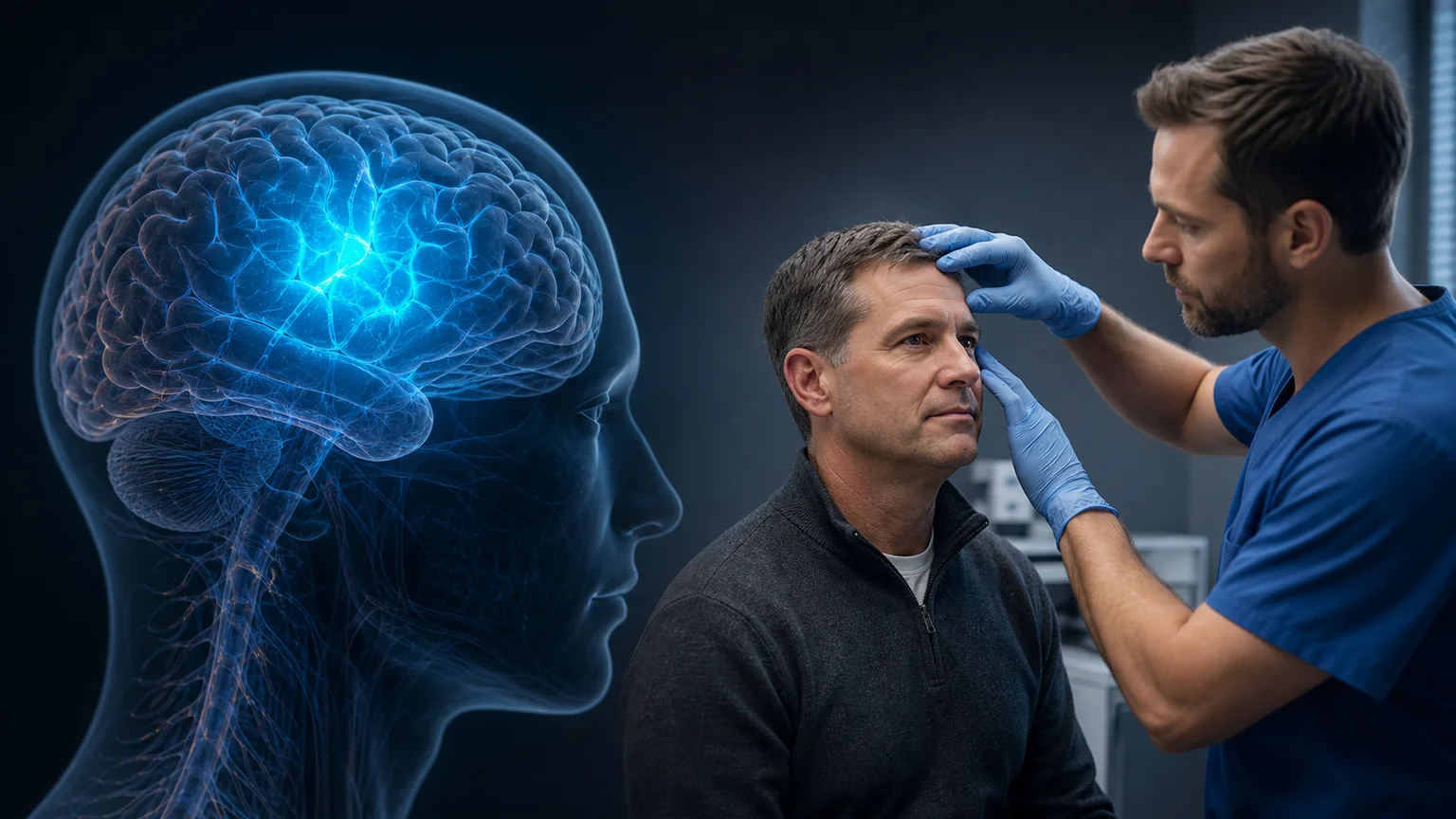
A traumatic brain injury is brain dysfunction caused by a blow, jolt or penetrating force, ranging from a mild concussion to a severe injury. Symptoms like headaches, memory trouble and mood changes can appear right away or build over days. Core Medical Center grades the injury, measures it with objective testing, and coordinates a medically directed recovery plan instead of guessing.
Traumatic Brain Injury Care in Blue Springs and Kansas City
A traumatic brain injury (TBI) happens when a blow, jolt or penetrating force disrupts how the brain works. It ranges from a mild concussion to a severe injury, and the symptoms can show up right away or build quietly over days. Core Medical Center provides medically directed evaluation and a coordinated recovery plan for patients across Blue Springs and the Greater Kansas City metro.
In short: a traumatic brain injury is brain dysfunction caused by an outside force, and recovery depends on getting it graded, measured and treated by a team that tracks your symptoms instead of guessing.
What a Traumatic Brain Injury Is
The brain sits in fluid inside the skull. A sudden impact or rapid change in motion can stretch and bruise brain tissue, even when there is no visible wound. That is why a “mild” TBI can still affect memory, focus, mood and balance for weeks or longer.
TBIs are usually grouped by severity:
- Mild, which includes most concussions, with brief or no loss of consciousness
- Moderate, with longer confusion, memory loss or neurological changes
- Severe, which involves extended loss of consciousness and needs emergency and ongoing medical care
Common Causes
Most traumatic brain injuries in our community trace back to a small set of everyday events:
- Falls, the leading cause overall, especially for older adults and young children
- Motor vehicle and motorcycle collisions, where the head strikes or whips against the interior
- Sports and recreation impacts, from contact sports to bike and skateboard spills
- Workplace accidents and assaults, including blunt-force trauma and struck-by injuries
If your injury came from a car wreck or an on-the-job event, the same head trauma often pairs with neck strain, whiplash and headaches, which we evaluate together rather than in isolation.
Symptoms
Symptoms can be physical, cognitive or emotional, and they do not always appear at the same time. Watch for:
- Persistent headaches, dizziness or sensitivity to light and noise
- Memory gaps, trouble concentrating and slowed thinking
- Mood changes, irritability, anxiety or depression
- Sleep disruption, fatigue and problems with balance
When these symptoms linger past the expected window, the injury may be developing into post-concussion syndrome, which calls for a more structured, measured approach. Related symptom overlap with everyday concussion recovery is common, so an accurate evaluation matters.
How We Evaluate It
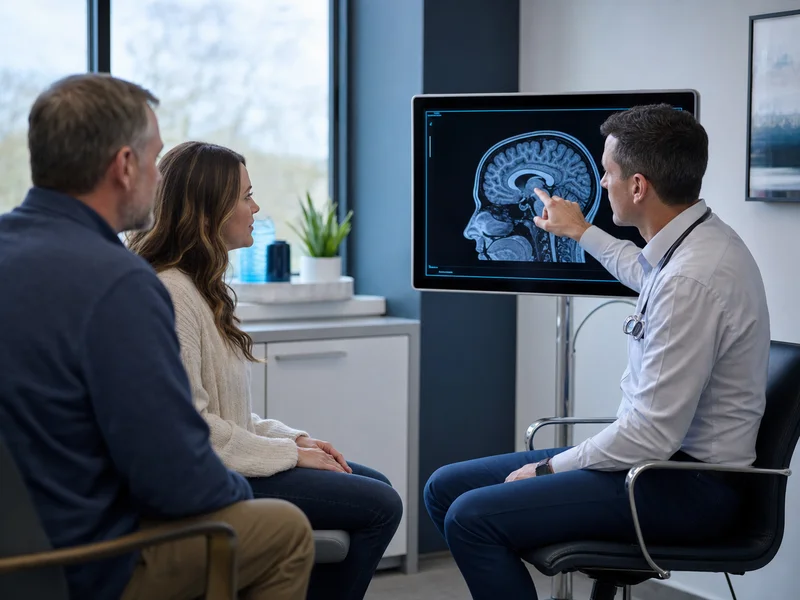
Recovery starts with an honest picture of what is actually affected. Your provider takes a full history of the injury, reviews your symptoms and uses objective measures rather than relying on how you feel on a single day. That baseline lets us see whether you are improving, plateauing or need a different plan, and it gives any insurer, employer or claim the documentation it needs.
Treatment Options
Brain injury recovery touches thinking, mood, balance, vision and the neck, so it needs more than one perspective under one roof. At Core Medical Center your plan can draw on:
- Concussion Treatment, our structured program for symptom-guided recovery and a safe return to work, school or sport
- Behavioral Health Services, for the mood, anxiety, sleep and adjustment changes that often follow a head injury
- Advanced Diagnostic Testing, including qEEG, to measure brain function objectively and track your progress over time
Your cognitive recovery is guided by Dr. C. Alan Hopewell, Ph.D., our neuropsychologist, who works alongside our therapy and behavioral health teams so the medical, cognitive and emotional sides of recovery stay aligned. Because every service shares one building in Blue Springs, your results feed directly into one coordinated plan.
When to Seek Care
Go to the emergency room for any red-flag signs after a head injury: loss of consciousness, repeated vomiting, seizures, slurred speech, one pupil larger than the other, or confusion that keeps getting worse. Our clinic, located minutes from Saint Luke’s East Hospital and near Centerpoint Medical Center, is built for what comes next: the lingering headaches, memory, mood and balance symptoms that need ongoing evaluation and treatment.
If a head injury is still affecting your daily life, you do not have to wait it out alone. Same-week appointments are typically available. Book an evaluation with our Blue Springs team and we will build the plan around your recovery.

Medically directed, under one roof
Get an Evaluation for Traumatic Brain Injury
Medically directed, non-surgical care first. Same-week appointments are typically available across our Blue Springs and Overland Park locations.
Book AppointmentCommon questions
Traumatic Brain Injury FAQ
What is the difference between a traumatic brain injury and a concussion?
A concussion is a mild traumatic brain injury. Traumatic brain injury is the broader category that ranges from mild to severe, and our team grades the injury, tracks symptoms over time and builds a recovery plan that matches its severity.
How long does recovery from a traumatic brain injury take?
Many mild injuries improve within weeks, while moderate and severe injuries or post-concussion symptoms can take months of structured care. We use objective testing to track progress rather than guesswork, and we adjust the plan as you heal.
When should I see a doctor after a head injury?
Seek emergency care for loss of consciousness, repeated vomiting, seizures, worsening confusion or a headache that keeps building. For lingering headaches, memory, mood or balance problems after the initial event, book an evaluation with our team in Blue Springs.